
 Image 1 of 1
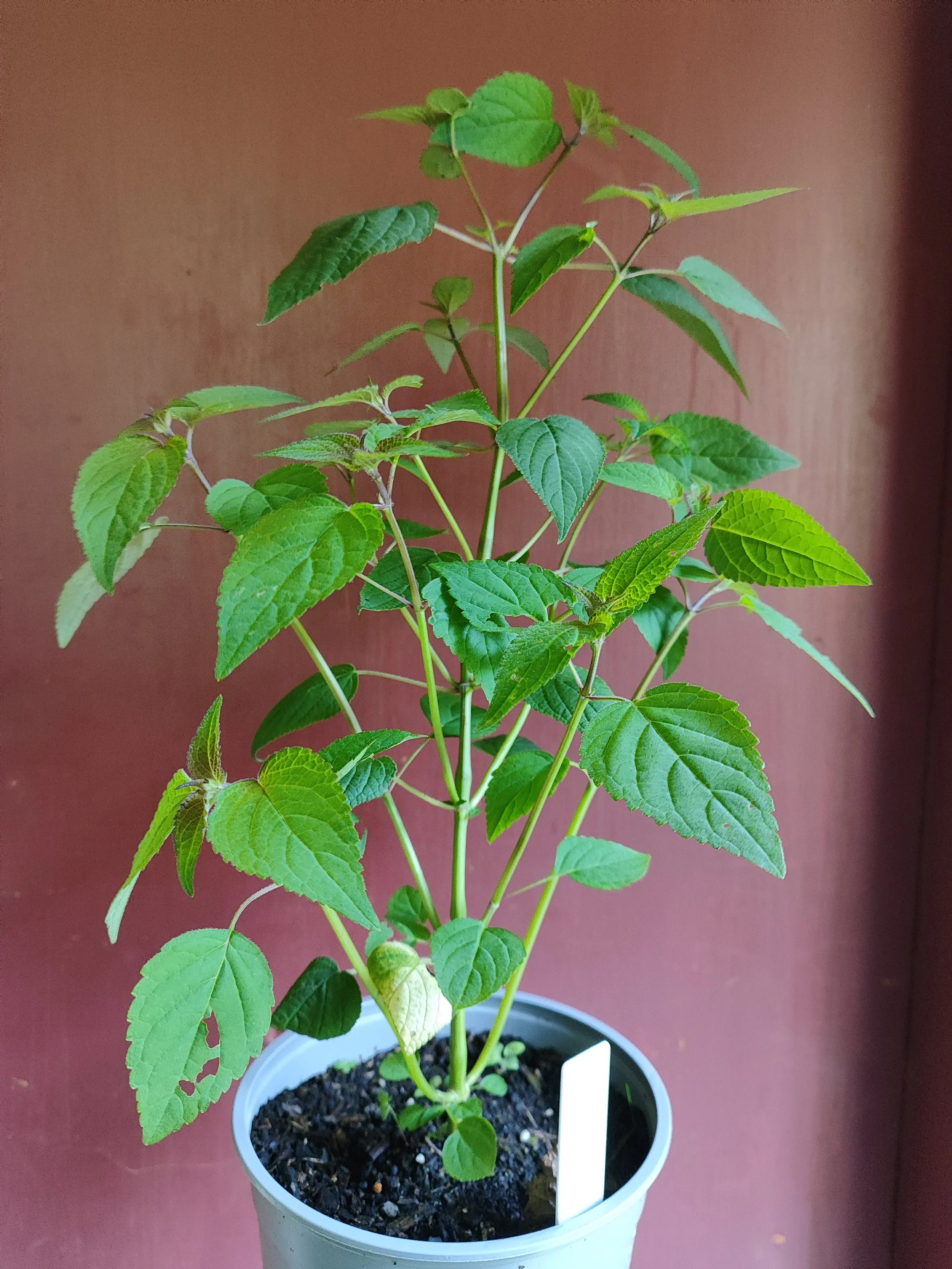
Pineapple sage (Salvia elegans) is a fragrant, perennial herb known for its bright, pineapple-scented leaves and clusters of tubular red flowers that attract bees; it thrives in sunny, well-drained spots and tolerates light frost in milder climates, though in colder areas it’s often grown as an annual or brought indoors for winter. The leaves are flavorful and can be used fresh in salads, teas, fruit dishes, and desserts for a subtle tropical note, while the blooms are edible and make an attractive garnish. Pineapple sage grows into a bushy plant 3–5 feet tall, responds well to regular pruning to maintain shape and encourage new growth, and prefers fertile soil with moderate moisture. It’s relatively pest-resistant and easy to propagate from cuttings, making it a useful and ornamental addition to herb and pollinator-friendly gardens.
Pineapple sage (Salvia elegans) is a fragrant, perennial herb known for its bright, pineapple-scented leaves and clusters of tubular red flowers that attract bees; it thrives in sunny, well-drained spots and tolerates light frost in milder climates, though in colder areas it’s often grown as an annual or brought indoors for winter. The leaves are flavorful and can be used fresh in salads, teas, fruit dishes, and desserts for a subtle tropical note, while the blooms are edible and make an attractive garnish. Pineapple sage grows into a bushy plant 3–5 feet tall, responds well to regular pruning to maintain shape and encourage new growth, and prefers fertile soil with moderate moisture. It’s relatively pest-resistant and easy to propagate from cuttings, making it a useful and ornamental addition to herb and pollinator-friendly gardens.